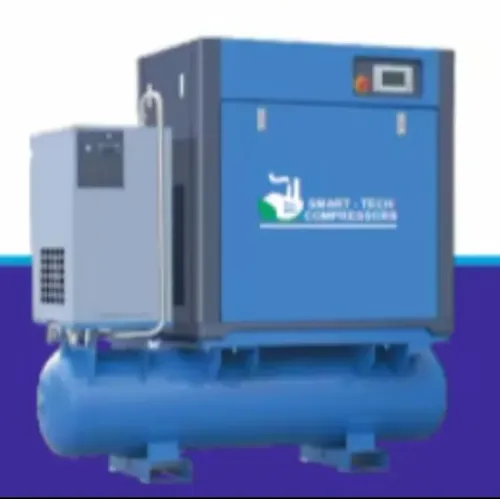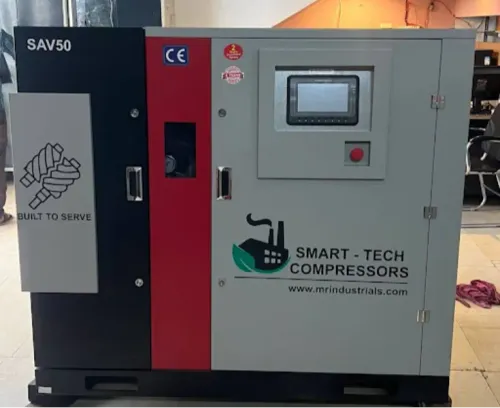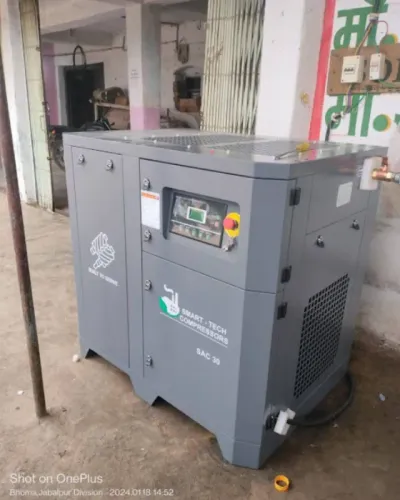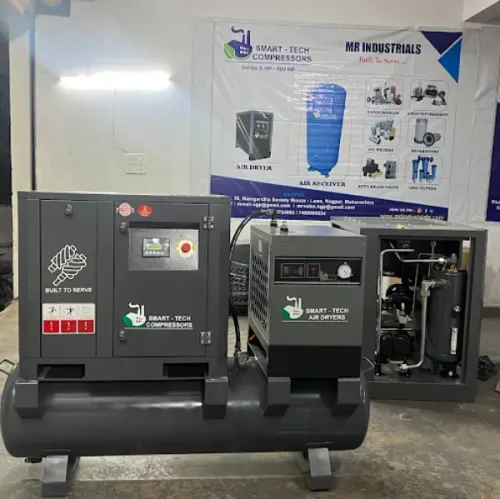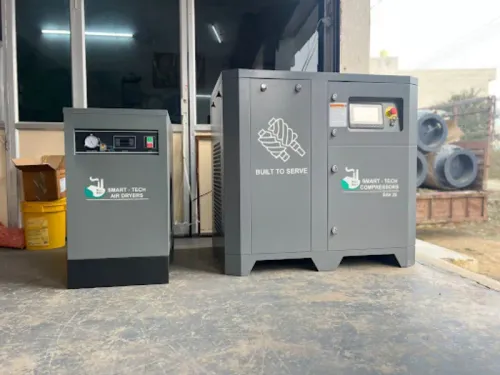
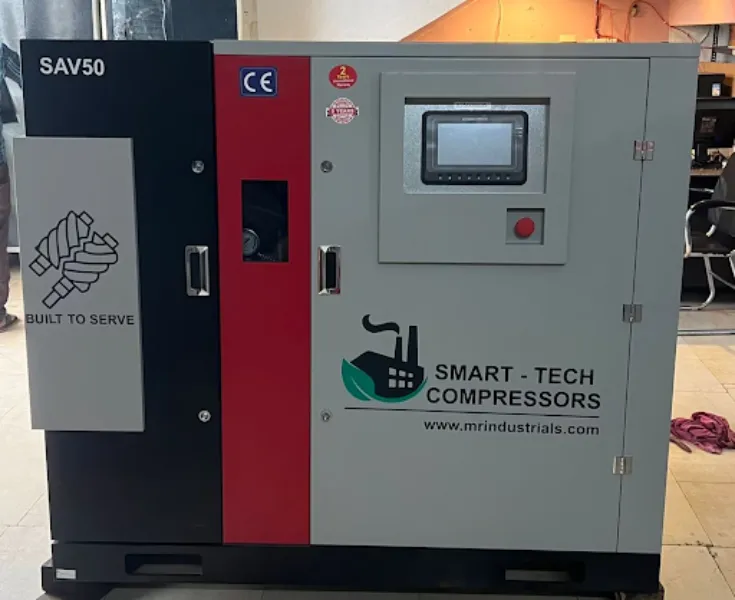
Cement manufacturing creates one of the more demanding environments for industrial equipment. Dust, continuous operating schedules, elevated ambient temperatures and heavy production loads can all affect compressed air systems. A properly selected Air Compressor for Cement Plant should therefore be evaluated for reliability, environmental suitability and maintainability.
Cement-related industrial operations in Nagpur and across Maharashtra need compressed air systems that can continue performing under site-specific operating conditions.
Understanding Compressed Air Applications in Cement Production
Compressed air can support multiple functions within a cement plant, including pneumatic controls, instrumentation, bag filters, material-handling systems, cleaning and workshop operations.
Different applications may require different pressure and air-quality levels. Instrument air, for example, may need greater attention to moisture and contaminants than some general utility applications.
Understanding these differences prevents the compressor system from being designed around a single assumed requirement.
Dust Management Begins at the Compressor Intake
Cement dust can affect intake filtration and cooling surfaces. As filters become restricted, compressor performance may deteriorate and operating temperatures can rise.
The compressor room location and intake arrangement should therefore be considered carefully.
Routine cleaning and inspection schedules may also need to be more frequent in dusty environments than in relatively clean manufacturing facilities.
Heat Can Affect Compressor Reliability
Compression generates substantial heat. When this is combined with high ambient temperatures and inadequate ventilation, the equipment may operate under unnecessary thermal stress.
A compressor room should provide sufficient fresh-air movement and effective discharge of hot cooling air.
Recirculation of hot exhaust air should be avoided because it can raise intake temperature and reduce cooling effectiveness.
Pressure Drop Should Be Investigated Systematically
When operators experience inadequate pressure at distant equipment, the compressor is not always the cause.
Pressure loss may occur because of long pipe runs, incorrect pipe diameter, blocked filtration, multiple bends or leakage.
A pressure survey at several points across the distribution network can help determine where losses occur.
Increasing compressor pressure without correcting distribution problems can increase power consumption and equipment stress.
Reliability Depends on Maintenance Access
A compressor installation should allow technicians to safely reach filters, coolers, separators, drains and other service components.
Maintenance planning may include:
- Monitoring operating temperatures.
- Checking pressure trends.
- Inspecting intake filters.
- Cleaning cooling surfaces.
- Checking lubricant condition where applicable.
- Inspecting condensate drainage.
- Recording unusual vibration or noise.
These basic practices can help detect deterioration before it becomes a major interruption.
Redundancy May Be Worth Evaluating
If loss of compressed air can stop a critical process, relying on a single machine deserves careful consideration.
Some plants use multiple compressors to provide operating flexibility and standby capacity. Whether this approach is justified depends on production criticality, demand patterns and acceptable downtime.
MR Industrials assists industrial businesses in Nagpur with compressed air equipment requirements, including applications where operating conditions demand careful compressor selection.
Frequently Asked Questions
Which compressor type is commonly used in cement plants
Rotary screw compressors are widely used for sustained industrial air demand. The appropriate configuration depends on capacity, pressure, environment and duty cycle.
How often should filters be checked
The interval depends on manufacturer recommendations and actual dust conditions. Highly contaminated environments may require more frequent inspection.
Does a larger compressor eliminate pressure problems
Not necessarily. Leakage and distribution pressure drop should be investigated before increasing compressor capacity.
A dependable Air Compressor for Cement Plant is ultimately the result of correct sizing, suitable installation, environmental protection and disciplined maintenance rather than capacity alone.
Keywords