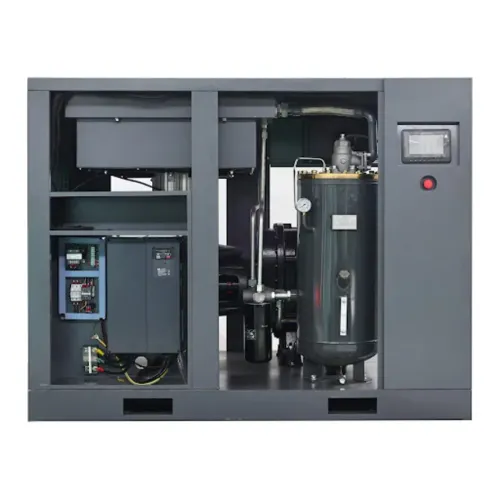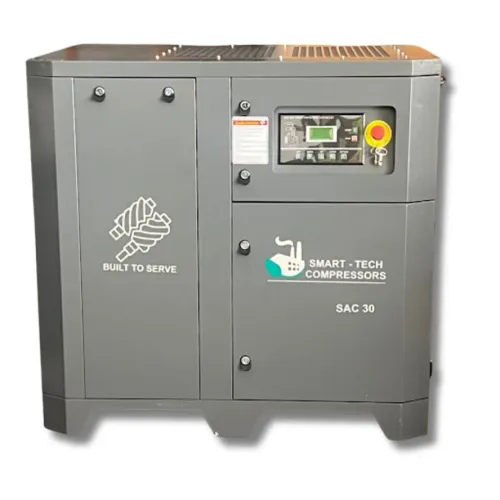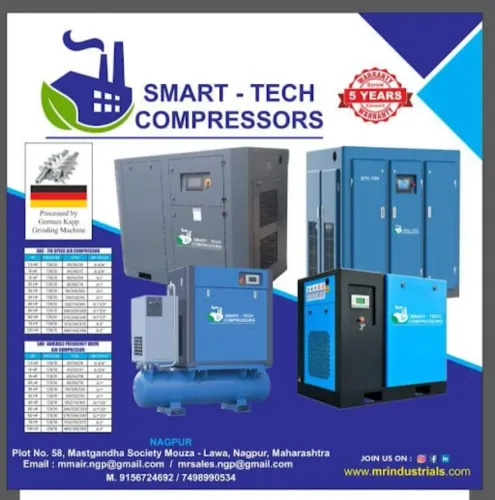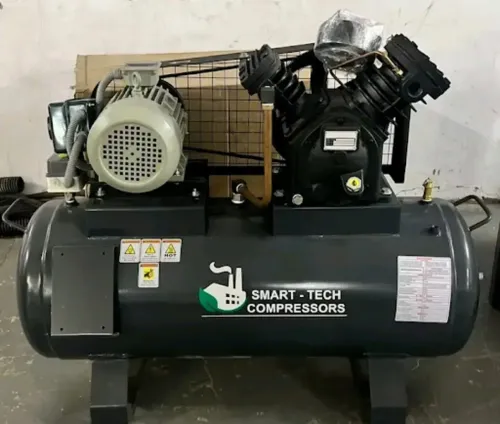
A compressor quotation can look competitive while using the wrong flow test, pressure assumption, control strategy or air-quality specification. By the end, you will have a practical way to calculate demand, compare like-for-like performance, test the complete air system and judge whether a manufacturer can support it over its working life.
Key takeaways
- Calculate demand from operating equipment, not compressor horsepower.
- Compare free air delivery, pressure and air quality at identical conditions.
- Match compressor controls to your plant’s changing load profile.
- Evaluate installation, commissioning, servicing and support before signing.
Start with the air demand your plant actually has
A compressor rated at 75 hp does not tell you whether it can supply your plant. Calculate demand from the equipment that will run, then compare that figure with free air delivery, not motor size.
- Record each tool, machine and process, with its required flow in CFM or m³/min and its minimum operating pressure in bar(g) or psi.
- Apply each machine’s duty cycle, then add only the equipment expected to operate simultaneously. Include cleaning guns, blow-off points and known leakage.
- Measure an existing system during peak production with a flow meter and pressure logger. Reconcile the reading with your worksheet; label the worksheet CFM calculation603no if your procurement system requires that identifier.
- Set compressor capacity above the calculated peak demand, using a documented engineering margin rather than an arbitrary percentage. State whether the quoted free air delivery is at the selected discharge pressure and under ISO 1217 test conditions.
- Identify the lowest pressure at the point of use, then add pressure losses through filters, dryers, separators, valves and piping. A compressor’s 7 bar(g) rating is inadequate if treatment losses leave a machine below its required 6 bar(g).
Give this load profile to every industrial air compressor manufacturer. Request performance data at your actual maximum flow, pressure, inlet temperature and ambient temperature; nominal capacity at a reference condition will not represent a hot compressor room or reduced operating pressure. Require dryer correction factors for those conditions.
Compare flow, pressure and air quality on the same basis
Ask every manufacturer to quote compressor performance under ISO 1217, with the test conditions shown. Require free air delivery, shaft or motor power, speed and specific energy at the same inlet temperature, pressure and humidity; otherwise two identical-looking flow figures can describe different outputs.
State discharge pressure in bar(g), minimum pressure at the point of use, and the psi pressure rating604no without mixing gauge and absolute pressure.
| Figure or requirement | Require in the quotation | Why it matters |
|---|---|---|
| Flow and pressure | FAD at the stated operating pressure, plus pressure at the use point | Nominal horsepower does not prove usable capacity |
| Treatment loss | Pressure drop across filters, dryer, separators, valves and pipework at design flow | A dirty filter raises compressor discharge pressure and energy use |
| Dryer capacity | Maximum flow, inlet pressure, inlet and ambient temperature, plus correction factors | Reference-condition capacity can fail in a hot compressor room |
| Noise | Sound-power or sound-pressure value, test standard, distance and installation assumptions | An unqualified dB(A) figure cannot be compared fairly |
Also require these details before comparing prices:
- State whether each automatic drain is timer-operated or zero-loss, its capacity at operating pressure, failure indication and maintenance bypass.
- Provide the receiver’s vessel rating, safety-valve set pressure, drain arrangement, inspection access, nameplate and jurisdictional design documents, such as ASME Section VIII certification where applicable.
- Ask for acceptance-test results, not only catalogue values.
Choose the control system that matches your load profile
The right choice depends on how demand changes, not on the motor’s horsepower. Match the compressor to your minimum, average and peak flow, then test the control range against the manufacturer’s performance data.
| Option | Better choice when | Main check before selection |
|---|---|---|
| Fixed-speed compressor | Demand stays near a steady base load and the unit runs loaded for long periods | Confirm unloading losses and avoid frequent start-stop cycling |
| VFD compressor | Flow changes throughout shifts and pressure must remain stable | Check the variable-speed drive’s minimum turndown, minimum stable speed, cooling, harmonics and part-load specific power |
| Multiple-compressor system | Production is critical, demand varies, or maintenance must not stop the plant | Require sequencing results at minimum, average and peak demand, including standby losses |
| Reciprocating compressor | Air demand is intermittent, flow is modest, or pressure is high | Check duty cycle, pulsation control, receiver size, noise and maintenance frequency |
A fixed-speed compressor can cost less to buy and operate efficiently at its design load, but it wastes energy while unloaded or throttled. A VFD compressor loses its advantage below its effective control range, so request a performance map rather than relying on the motor nameplate.
For a multiple-compressor system, ask how the controller starts, stops and rotates machines. Also verify partial production after one unit is isolated. Compare ISO 1217 flow, power and specific-energy data across the expected operating range, not just the full-load figure.
Check the complete installation, not just the compressor package
A dryer selected at catalogue flow can fail in a hot compressor room or at lower operating pressure. Require sizing for maximum flow, pressure, inlet temperature and ambient temperature, with correction factors, pressure drop and the specified pressure dew point.
| Treatment | Typical target | Cost and reliability checks |
|---|---|---|
| Refrigerated dryer | Positive pressure dew point near +3 °C | Confirm capacity at worst-case conditions and actual pressure |
| Desiccant dryer | Substantially lower dew point | Price regeneration air, purge losses, inlet-temperature limits and pressure drop |
Require the installation quotation to identify:
- Receiver volume, allowable pressure swing and control strategy; a receiver stabilises demand but cannot fix an undersized compressor or distribution system.
- The air receiver tank safety valve set pressure, drain arrangement, inspection access, nameplate and vessel rating.
- Pressure-vessel design documentation required locally, such as ASME Boiler and Pressure Vessel Code Section VIII certification or EU Pressure Equipment Directive conformity.
- Automatic drains, an oil-water separator and a legally compliant disposal route; continuous discharge to a floor drain can release concentrated hydrocarbons or treatment chemicals.
- Piping diameter, length, isolation valves and pressure-drop assumptions, plus standby capacity if production cannot tolerate a compressor or dryer outage.
- Acoustic test basis, measurement distance and installation assumptions; sound-power and sound-pressure values are not interchangeable.
The quote should show whether redundancy covers the compressor, dryer, filters and drain controls. A missing bypass or isolation valve can turn routine maintenance into a plant shutdown.
Test the manufacturer's support before you sign
Ask for evidence of lifecycle support, not assurances about the warranty. Whether you are assessing SMART - TECH COMPRESSORS or another supplier, use the same written checklist and require named contacts, response times and local parts availability.
1. Request the compressor maintenance intervals, oil and separator specifications, service procedures, recommended critical spares and the expected availability period for controllers, drives and sensors. Ask what happens when the model becomes obsolete; proprietary consumables or unavailable controls can make a low purchase price expensive.
2. Test compressed-air service support before signing. Ask who attends a breakdown, where technicians are based, the normal response arrangement and which tasks your staff can perform. Require training records, service reports and a sample maintenance log rather than a promise of “fast service.”
3. Examine every drain and treatment item. The quotation must state the automatic drain valve capacity at your operating pressure, timer open time or zero-loss design, failure indication, level-sensor and valve testing procedure, and maintenance-bypass arrangement. A timer drain can waste air; a zero-loss drain adds controls that can fail.
4. Demand a quotation that identifies free-air delivery, pressure, power and specific power under ISO 1217 test conditions, preferably with acceptance-test results. It must also show exclusions, installation assumptions, consumables, commissioning, taxes, delivery, sound-test basis and all recurring costs. Ask the supplier to demonstrate sequencing and service access at minimum, average and peak demand.
Related products
 | Tank Mounted 10HP TANK MOUNTED MODEL FOR PACKAGING INDUSTRIES Tank mounted complete package rotary screw air compressor specially built for small industries with affordable prices and service. |
 | Rotary Screw Air Compressor Smart -Tech Compressors Upto 300 HP We brought Special customised machine for customers , very cost effective and breakdown free , long life with energy saving and low maintenance... |
Frequently asked questions
How do you determine the right compressor capacity for a plant?
List the equipment that will operate, record each flow and pressure requirement, account for operating schedules and leakage, then compare total demand with free air delivery rather than motor horsepower.
What should you compare when reviewing compressor specifications?
Compare free air delivery, discharge pressure and required air quality on the same test basis. Check the stated measurement conditions instead of comparing headline figures alone.
How should compressor controls match plant demand?
Choose controls according to the load profile. A plant with steady demand needs a different control approach from one with frequent shifts between low and high air use.
What installation details should you check beyond the compressor package?
Review the receiver tank, air treatment, drains, piping, ventilation, electrical supply, foundations, commissioning and access for maintenance.
How can you assess a manufacturer's support before signing?
Ask how the manufacturer handles installation, commissioning, preventive maintenance, spare parts, service response and troubleshooting, then test whether the answers are specific and documented.
Related products
 | Rotary Screw Air Compressors braught a customised machine for customers very good in Quality , low cost , energy saving , low maintenance cost , fast service availability , and 5... View product → |
 | Rotary Screw Air Compressor SMART -TECH MAKE 25 HP VFD COMPRESSOR ₹380000 Smart -Tech compressors braught a customised machine for customers very good in Quality , low cost , energy saving , low maintenance cost , fast... |
 | Rotary Screw Air Compressor Smart -Tech Make 30 HP Fix Speed Compressor ₹310000 Smart -Tech compressors braught a customised machine for customers very good in Quality , low cost , energy saving , low maintenance cost , fast... |
 | Rotary Screw Air Compressor 50HP SMART -TECH VFD COMPRESSOR PREMIUM MODEL PREMIUM RANGE ROTARY SCREW AIR COMPRESSOR 50HP VFD MODEL WITH VERY AFFORDABLE PRICE AND MORE WARRANTY THAN ANY BRAND |