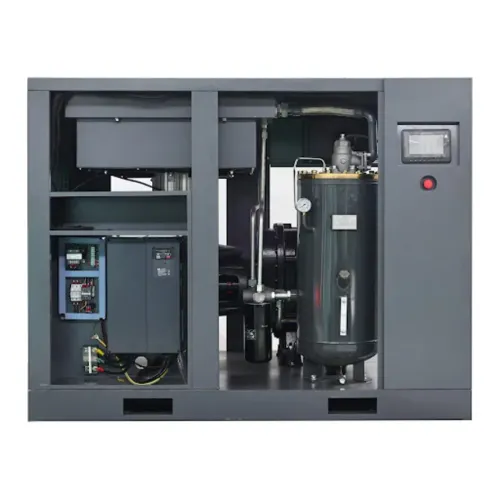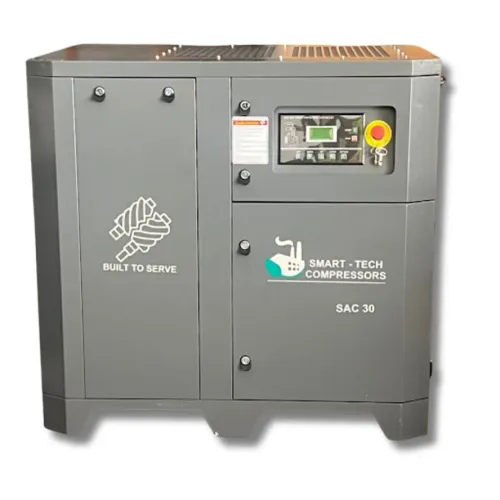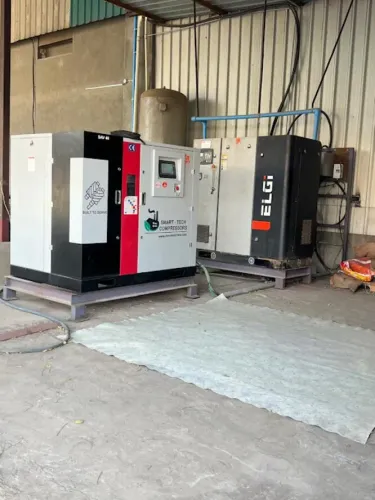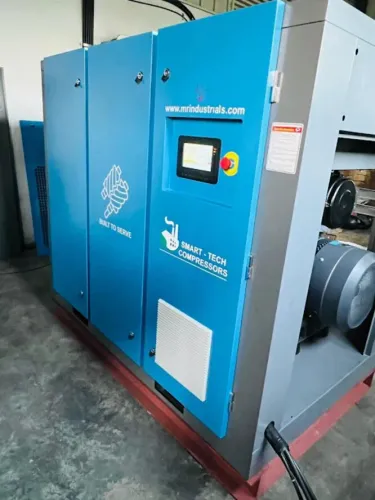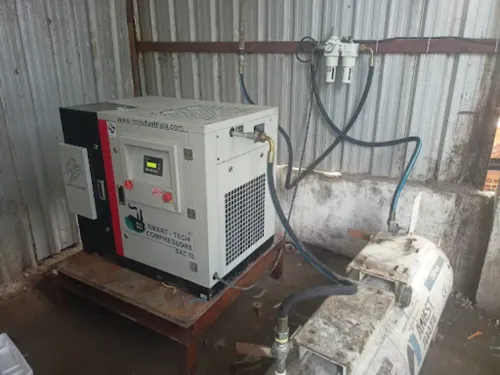
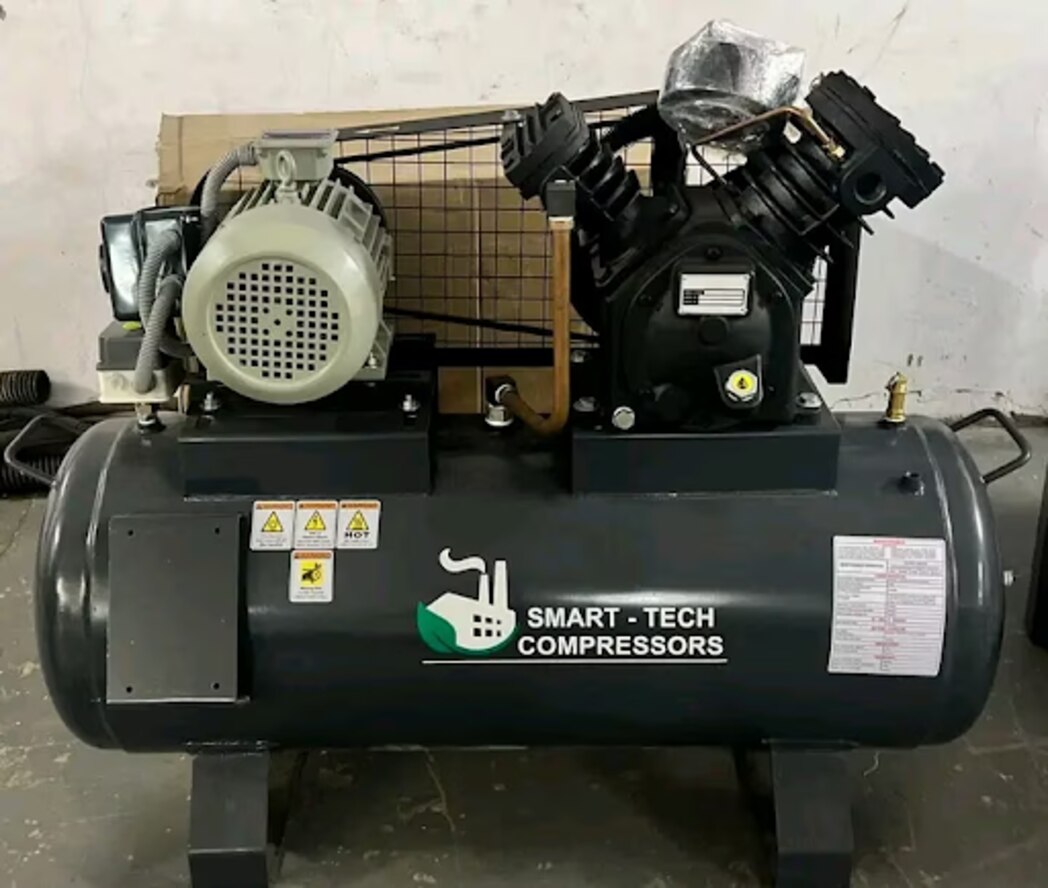
A screw compressor with a lower purchase price can cost more over its service life when it is poorly matched to demand, wastes power at part load, or remains unavailable during a fault. You will be able to compare VFD and fixed-speed packages, verify efficiency claims, calculate lifecycle cost, and test whether a manufacturer’s service network can protect production.
Key takeaways
- Specify FAD at the required pressure before comparing compressor sizes.
- Choose VFD or fixed speed from measured demand variation and operating hours.
- Compare package power only when test pressure and inlet conditions match.
- Score service response, spare parts, maintenance, and downtime support in writing.
Start with the air demand, not the motor horsepower
Choose compressor capacity from measured air demand, not motor horsepower. Specify the required free air delivery (FAD) in m³/min or CFM at the inlet conditions and working pressure, such as 7 bar or 10 bar. A larger motor or nominal displacement does not prove that the package supplies more usable air.
Build the demand picture before requesting quotations:
- Record minimum, average, and peak flow during each production shift.
- Measure pressure at the point of use, then add only the pressure drop required by dryers, filters, piping, and controls.
- Include the duty cycle, load/unload frequency, leakage, and planned production expansion.
- Request FAD and package input power at the same discharge pressure, with ISO 1217 acceptance-test conditions stated.
- Check the delivered pressure after treatment, not only the compressor outlet pressure.
The correct margin covers genuine peaks and planned growth without running a large motor at light load for most of the day. Fix leaks before sizing: otherwise, you buy capacity to replace wasted air and pay to compress it for years.
| Capacity choice | What it means | When it applies |
|---|---|---|
| Below measured peak | Pressure falls or production waits for recovery | Only when a receiver and a controlled, non-critical peak can bridge the gap |
| Matched to demand | FAD meets peak flow at the required bar with a defined margin | Best starting point for stable production |
| Far above demand | Extra motor and package capacity remain lightly loaded | Avoid unless expansion dates and added demand justify it |
Use the demand profile to decide between VFD and fixed speed
Choose a VFD compressor when plant demand changes substantially during the duty cycle. The variable-speed drive reduces motor speed as air demand falls, avoiding much of the unload-and-reload energy used by a fixed-speed compressor.
Measure these conditions over representative production days before deciding:
- Minimum and maximum demand in m³/min or CFM
- Hours per day at each demand level
- Load/unload frequency and low-production periods
- Working pressure in bar, leakage, and expected expansion
| Option | Energy advantage | Better fit |
|---|---|---|
| VFD compressor | Matches motor output to changing flow and limits unloaded running | Variable demand, long low-load periods, frequent shifts |
| Fixed-speed compressor | Delivers strong efficiency near full load without drive losses | Stable demand close to rated capacity |
| Multiple fixed-speed units | Stages capacity and keeps running machines near efficient load | Plants with predictable steps in demand |
A fixed-speed compressor can be the better choice when demand remains steady and its motor runs near full load for most of the day. It also avoids the purchase cost and losses of a variable-speed drive. Do not assume it uses no energy when unloaded: many machines still draw about 15%–35% of full-load power.
A poorly sized VFD compressor can spend long periods near its minimum speed, where motor and drive losses weaken the saving. Ask for measured part-load power, minimum efficient operating point, unloaded consumption, and the control sequence.
Do not raise pressure to compensate for blocked filters or undersized pipework. Cutting pressure by about 2 psi can reduce compressor energy use by roughly 1%, while higher pressure increases leakage and wasteful end-use consumption.
Compare package power under stated test conditions
Request package input power and free-air delivery (FAD) measured at identical inlet conditions, discharge pressure, and air-quality requirements. Motor horsepower or nominal displacement cannot prove which compressor supplies more usable air.
| Evidence to request | What to compare |
|---|---|
| CAGI performance data sheet | FAD, package input power, and specific power in kW per m³/min at the stated pressure |
| ISO 1217 test basis | Whether acceptance and performance testing followed the same standard and measurement method |
| Test conditions | Inlet temperature and pressure, humidity, discharge pressure, voltage, frequency, and cooling method |
| Package scope | Whether dryers, filters, separators, drains, fans, and controls are included in power and pressure-drop figures |
| Part-load results | Input power at minimum, midpoint, and maximum demand, plus unloaded or standby consumption |
| Delivered-air result | FAD and specific power after package pressure losses, not only compressor-element output |
A CAGI performance data sheet makes competing packages easier to compare, but read every footnote. Ask for the actual test report when a figure is not independently verified or when the packages use different auxiliaries.
Do not accept full-load specific power as the entire energy case. A fixed-speed compressor can consume roughly 15%–35% of full-load power while unloaded, so require the control sequence, minimum efficient operating point, load/unload frequency, and expected standby consumption. Compare measured performance at the demand levels your plant actually uses.
Treat the whole air system as part of compressor efficiency
An efficient compressor can lose its advantage before air reaches the production line. Raising the set pressure to overcome an undersized distribution system or clogged filters increases leakage and end-use consumption; reducing pressure by about 2 psi can cut compressor energy use by roughly 1%.
| Condition | How savings disappear | What to verify |
|---|---|---|
| Undersized pipe or loaded filters | Pressure drop forces a higher discharge set point and wastes energy | Pressure at the compressor and point of use under peak flow |
| Air dryer and separators | Dryer power, purge air, drains and filter resistance reduce delivered-air efficiency | Dryer power or purge consumption, filter loading limit and pressure drop |
| Leaks and open blow-off devices | The compressor produces air that never performs useful work | Leak survey results and annual leakage-repair plan |
| Poorly sized air receiver | Rapid load and unload cycles increase control losses and unnecessary starts | Receiver volume, pressure band and demand pattern |
| Hot or dirty cooling conditions | Higher inlet or discharge temperatures increase power and reduce capacity | Ventilation, cooling-water temperature and cooler cleanliness |
Compare specific power at the point where usable air is delivered, not only at the compressor outlet. The figure should include the air dryer, filters, separators, drains and controls.
A VFD also needs the right load profile. Long operation near minimum speed, excessive turndown or cycling can erase its benefit, while a fixed-speed unit may suit steady, high demand. Ask for measured part-load performance, package pressure drop and the pressure-dew-point class required; a desiccant dryer’s purge flow can outweigh its purchase-price advantage.
Make service support a measurable part of the purchase decision
Require service commitments in writing before you sign: a named contact, response time, restoration target, maintenance schedule, parts policy, and escalation process. A low purchase price becomes expensive when a blocked separator reduces capacity or a failed sensor leaves production idle.
1. State preventive maintenance intervals by operating hours, including oil changes, cooler cleaning, intake-filter replacement, separator inspection, drain servicing, and belt or coupling checks where fitted.
2. Specify genuine filters and separators, approved lubricants, and the exact technical equivalent allowed if the manufacturer cannot supply original parts. Include delivery times for critical spares and identify which parts the site should stock.
3. Set a response time for remote assistance and an on-site visit, such as acknowledgement within two hours and attendance within one business day. Require remote diagnostics that provide alarms, operating hours, discharge pressure, temperature, load status, and fault history.
4. Define restoration targets separately from response time. A technician answering the phone within an hour does not restore production; state the maximum time to return the compressor to service or provide a temporary replacement.
5. Require an annual ultrasonic leak survey with tagged leaks, repair verification, and a leakage trend report. This turns lost air into a measurable maintenance issue rather than a recurring complaint.
SMART - TECH COMPRESSORS should be asked to place these intervals, targets, parts commitments, and reporting duties on the quotation or service contract. Verbal promises are difficult to enforce when energy use rises or a breakdown interrupts production.
Related products
 | Rotary Screw Air Compressor SMART -TECH MAKE 25 HP VFD COMPRESSOR ₹380000 Smart -Tech compressors braught a customised machine for customers very good in Quality , low cost , energy saving , low maintenance cost , fast... |
 | Rotary Screw Air Compressors braught a customised machine for customers very good in Quality , low cost , energy saving , low maintenance cost , fast service availability , and 5... View product → |
Frequently asked questions
Why should you size a screw compressor by FAD instead of motor horsepower?
FAD measures the usable air delivered at stated inlet conditions and working pressure. Motor horsepower only describes the motor’s rated capacity and does not prove the package delivers more air.
When is a VFD screw compressor preferable to a fixed-speed model?
Use the demand profile: a VFD suits systems with substantial air-demand variation, while a fixed-speed model suits steadier demand and consistent loading.
How can you compare the energy efficiency of screw compressor packages?
Compare package power at the same working pressure, inlet conditions, and stated test method. A motor rating alone does not provide a fair efficiency comparison.
What service support should you assess before choosing a manufacturer?
Ask for documented response times, spare-parts availability, preventive-maintenance scope, technician coverage, and a clear plan for breakdown support and downtime.
Related products
 | Rotary Screw Air Compressor Smart -Tech Compressors Upto 300 HP We brought Special customised machine for customers , very cost effective and breakdown free , long life with energy saving and low maintenance... |
 | Rotary Screw Air Compressor Smart -Tech Make 30 HP Fix Speed Compressor ₹310000 Smart -Tech compressors braught a customised machine for customers very good in Quality , low cost , energy saving , low maintenance cost , fast... |
 | Tank Mounted 10HP TANK MOUNTED MODEL FOR PACKAGING INDUSTRIES Tank mounted complete package rotary screw air compressor specially built for small industries with affordable prices and service. |
 | Rotary Screw Air Compressor 50HP SMART -TECH VFD COMPRESSOR PREMIUM MODEL PREMIUM RANGE ROTARY SCREW AIR COMPRESSOR 50HP VFD MODEL WITH VERY AFFORDABLE PRICE AND MORE WARRANTY THAN ANY BRAND |