Compressed air does far more than power a workshop impact wrench: it clamps body panels, drives fastening tools, atomises paint, moves components, removes chips, tests assemblies, and inflates tyres. By mapping each use to its pressure, flow, air-quality, and duty-cycle demand, you can specify an automotive air system without choosing by horsepower or tank size alone.
Key takeaways
- Size the compressor from simultaneous flow demand, pressure loss and duty cycle.
- Use dryers, filters and automatic drains to protect paint, tools and controls.
- Separate plant, component-factory and workshop demand before selecting capacity.
- Verify pressure and flow at the farthest production point after installation.
Where compressed air is used from body shop to final assembly
Compressed air supports vehicle production from body-in-white fabrication through final assembly, powering actuators, tools, spray equipment, testing devices and cleaning systems. The compressor must deliver enough flow at each point of use, not merely the pressure printed on its nameplate.
| Stage | What compressed air powers | Production role |
|---|---|---|
| Body shop | Body-shop pneumatic tools, fixture clamps, pins, grippers, part ejectors and robotic spot-welding equipment | Holds panels accurately, moves parts and supports weld-gun actuation |
| Transfer and handling | Pneumatic hoists, lifts, slides, grippers and air motors | Moves panels, components and assemblies between stations |
| Cleaning and drying | Guarded blowoff nozzles, engineered air knives and drying manifolds | Removes chips, dust and water before joining or coating |
| Paint shop | Spray-gun atomisation and booth instruments | Applies primers, basecoat and clearcoat; oil, water and particles can cause fisheyes or poor adhesion |
| Testing | Leak-test fixtures and pressure circuits | Checks tanks, pipes, doors and sealed assemblies for pressure loss |
| Final assembly | Impact wrenches, nutrunners, riveters, staplers, drills, grinders, clamps and assembly fixtures and clamps | Fastens parts and holds components during installation |
| Tyre and service operations | Tyre inflation tools and component-cleaning equipment | Sets tyre pressure and removes debris from parts |
Use vacuum extraction or mechanical cleaning where practical; uncontrolled air can project chips toward workers or adjacent equipment, and never use compressed air on clothing or skin. Local receivers help absorb simultaneous tool-start peaks, while restricted hoses, couplings, filters or regulators can still reduce fastening torque and cycle speed.
How vehicle plants, component factories and workshops differ in air demand
Air demand changes sharply between a vehicle plant, a component factory and a workshop. Vehicle plants need high, continuous flow for assembly tools, paint-shop atomisation, fixtures and automated equipment. Smaller operations need air intermittently, so receiver capacity and duty cycle matter as much as compressor output.
| Setting | Demand pattern | Main uses | Air requirement |
|---|---|---|---|
| Vehicle manufacturing plant | Continuous, high and fluctuating | Assembly tools, clamps, robots, paint-shop atomisation, blow-off and drying, leak testing | Stable pressure, high flow, treated air, distributed through ring mains |
| Auto-component factory | Cell-based and process-specific | Presses, grinders, drills, material handling, component cleaning and leak testing | Flow varies by machine; oil-free or filtered air may be required for coatings and instruments |
| Repair workshop | Intermittent peaks | Impact wrenches, grinders, riveters, tyre inflation and cleaning | A receiver helps cover short bursts; compressor recovery time affects productivity |
| Service station | Short, frequent demand at separate points | Tyre inflation, blow-off, brake work and small pneumatic tools | Moderate flow with convenient hose points; drainage and hose management prevent water reaching tools |
Component plants can run one compressor continuously for several production cells, while a workshop may suit a reciprocating unit that cycles between jobs. A tank-mounted package can serve an isolated bay, but the receiver, dryer and electrical supply must match actual use.
Open blow-off consumes surprising flow and can project chips or dust; use guarded nozzles, air knives or vacuum extraction, never air on clothing or skin. Find leaks at couplers, drains and fittings with ultrasonic surveys, then verify repairs outside production hours.
How to calculate flow, pressure and storage before choosing a compressor
Size the compressor from free air delivery at the required discharge pressure, not from motor horsepower or an average tool rating. Record each tool’s air consumption in litres per minute, then total only the tools expected to operate together. That total is your peak simultaneous demand.
- Add measured leakage from a pressure-decay or ultrasonic survey.
- Add capacity for planned tools, shifts or production lines.
- Check flow at the tool inlet with the tool running, not only at the compressor outlet.
- Measure pressure at the compressor discharge, main header, branch, regulator and tool inlet under load.
The lowest loaded reading must exceed the tool’s required pressure after allowing for pressure loss through filters, hoses, couplings, regulators and undersized piping. Raising the compressor setpoint can hide a restriction while increasing leakage and energy use.
Storage must match the demand profile and compressor response:
| Storage location | Calculation role | Failure if misapplied |
|---|---|---|
| Wet-side receiver | Reduces cycling and lets bulk condensate settle before drying | It cannot replace compressor capacity or a correctly sized main |
| Dry-side receiver | Supplies short peaks after the dryer | It cannot overcome a restricted branch or point-of-use fitting |
| No local storage | Suits steady demand with adequate compressor and piping capacity | Simultaneous tool starts can cause torque loss and pressure collapse |
For a short peak, estimate receiver volume with V = Q × t × Patm ÷ (P1 − P2), using free-air flow, minutes, and absolute pressures. Confirm the result with a demand log before ordering.
How air quality, dryers, drains and piping protect production
Paint defects often begin in the compressor room. Oil, liquid water, particles and desiccant dust can cause fisheyes, cratering, poor adhesion or blocked spray equipment, so specify air by ISO 8573-1 class, not by a vague “clean and dry” label.
A designation such as ISO 8573-1:2010 Class 1.2.1 states separate limits for particles, water and oil.
| Option | What it controls | When it applies |
|---|---|---|
| Refrigerated dryer | Reduces water to a low-single-digit °C pressure dew point | General plant air when lines and tools will not fall below that range |
| Desiccant dryer | Produces a substantially lower pressure dew point | Cold outdoor lines, instruments, paint processes or stricter process-air requirements; allow for purge or regeneration energy |
| Coalescing filters | Removes liquid aerosols and fine oil contamination | Upstream of sensitive paint and instrument circuits |
| Particulate filters | Captures solid particles and filter or desiccant dust | Before tools, spray equipment and precision valves |
Fit automatic drains to receivers, filters and dryers, then provide access for testing and replacement. A drain stuck open wastes compressed air; one stuck closed lets water accumulate. Oil-lubricated compressors also produce contaminated condensate, so use an oil-water separator where required and dispose of the separated waste legally.
Use a sloped ring main with correctly sized branches, isolation valves and point-of-use filters. Separate general tool air from regulated instrument, paint and cleaning circuits. Pressure-controlled blow guns reduce demand, noise and airborne debris; never treat an open high-pressure blowoff line as harmless.
How to choose, install and verify a reliable automotive air system
Choose from a measured demand profile, not the motor nameplate alone. Compare fixed-speed versus variable-frequency drive equipment against loaded hours, turndown, pressure setpoint and electricity cost.
| Option | Best fit | Main risk or cost check |
|---|---|---|
| Fixed-speed compressor | Stable, continuous base load | Frequent cycling wastes energy and stresses controls |
| Variable-frequency-drive compressor | Demand that rises and falls substantially | Poor sequencing or operation below efficient turndown can erase savings |
| One large machine | High, steady demand with planned standby | A breakdown can stop the entire plant |
| Multiple machines | Variable demand, expansion or critical production | Buy lead-lag control; several partly loaded machines waste power |
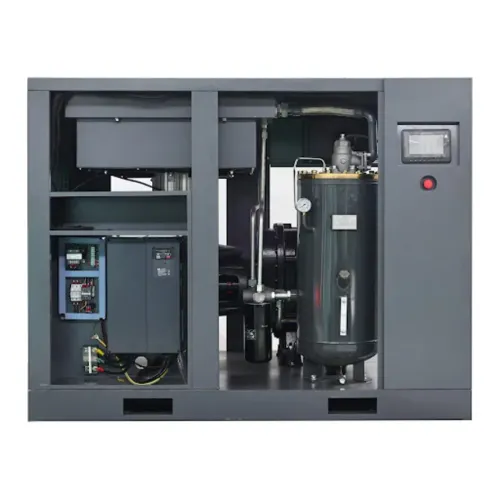
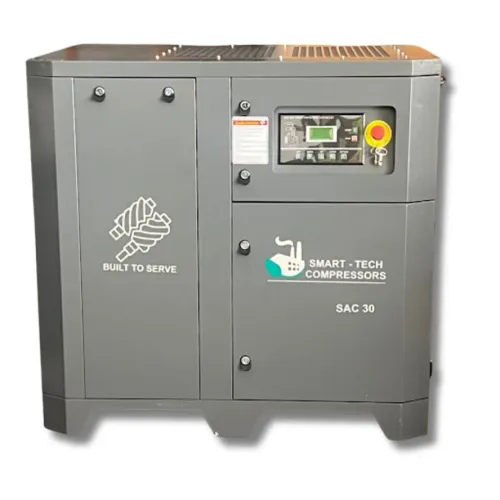
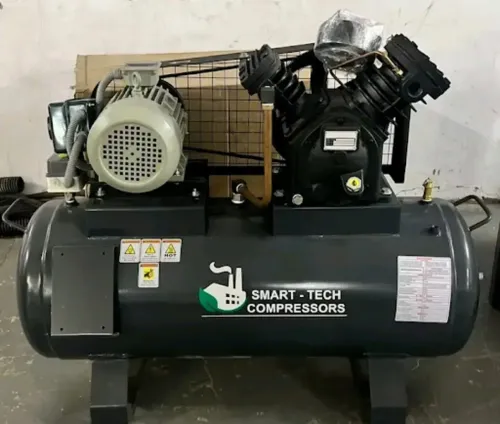
Use a rotary screw compressor for continuous plant demand and a reciprocating unit for intermittent, lower-volume service points. A tank package suits an isolated cell only after checking its receiver, dryer, drains and duty cycle.
Before acceptance, require a commissioning checklist and supplier verification covering:
- Confirm electrical supply, isolator rating, earthing, cable size, phase sequence and ventilation clearances.
- Record delivered flow, pressure at the furthest point, dryer dew point and receiver pressure under production load.
- Test automatic drains; a drain stuck open wastes air, while one stuck closed fills filters and receivers with condensate.
- Complete an ultrasonic leak survey, tag repairs and repeat the survey after correction.
- Obtain filter, dryer, oil-separator and service intervals, spare-parts availability, response times and warranty exclusions in writing.
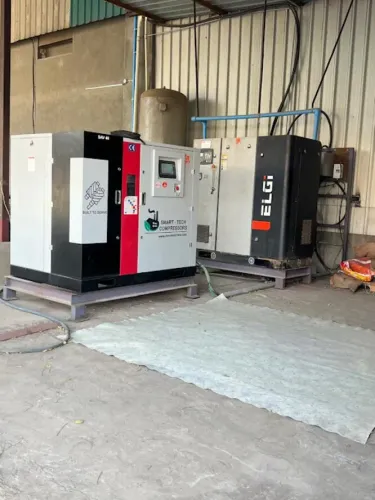
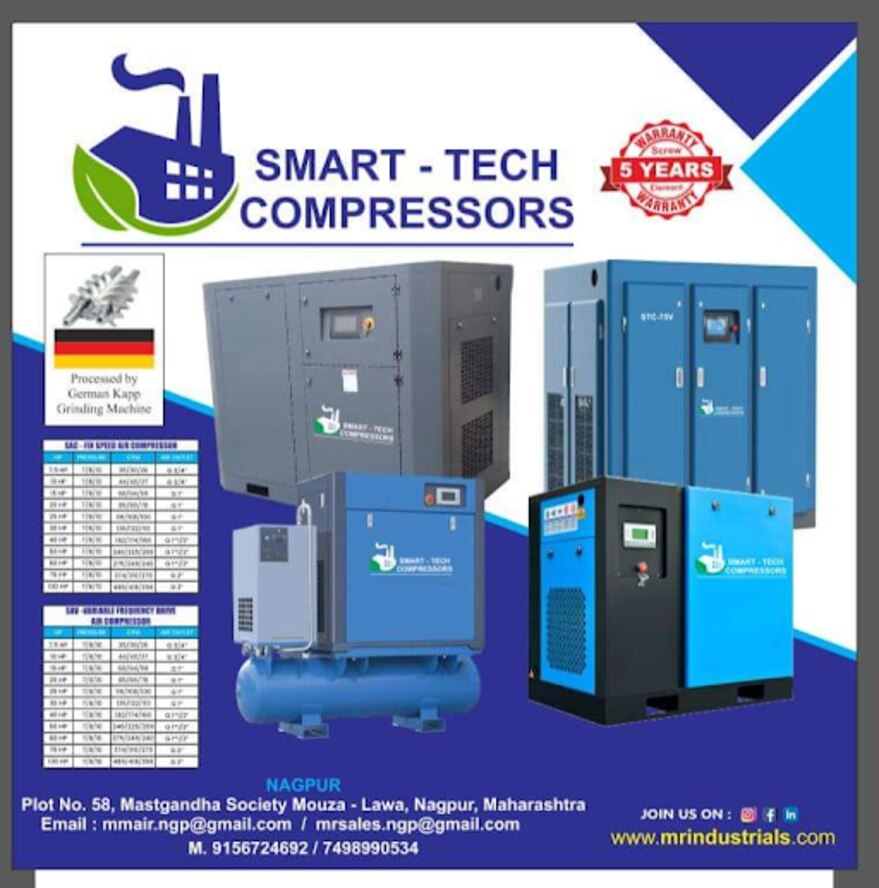
SMART - TECH COMPRESSORS can be compared on these documented results rather than advertised horsepower. Calculate total cost from purchase, installation, electricity, maintenance, condensate disposal, downtime and future capacity—not compressor price alone.
Related products
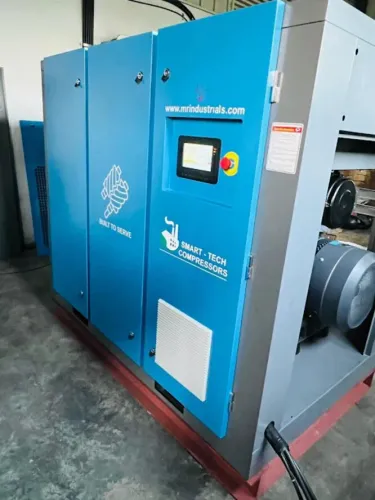
 | Rotary Screw Air Compressor Smart -Tech Compressors Upto 300 HP We brought Special customised machine for customers , very cost effective and breakdown free , long life with energy saving and low maintenance... |
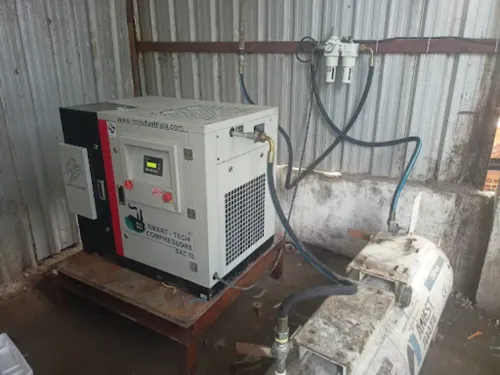
 | Rotary Screw Air Compressor SMART -TECH MAKE 25 HP VFD COMPRESSOR ₹380000 Smart -Tech compressors braught a customised machine for customers very good in Quality , low cost , energy saving , low maintenance cost , fast... |
Frequently asked questions
Where is compressed air used in automotive manufacturing?
Compressed air powers body-shop actuators, clamps, riveting and fastening tools, spray equipment, leak tests, cleaning systems and final-assembly devices.
How do air requirements differ between vehicle plants, component factories and workshops?
Vehicle plants combine many simultaneous users, component factories often serve dedicated machining or forming processes, and workshops have lower but more variable demand.
How do you calculate compressor flow, pressure and storage?
List each air consumer's flow and operating pressure, apply its duty cycle and coincidence factor, add leakage and future capacity, then account for pressure loss through dryers, filters and piping.
Why do dryers, drains, filters and piping matter in an automotive air system?
They remove water, oil and particulates, prevent corrosion and tool failures, and maintain pressure at distant points of use.
Related products
 | Rotary Screw Air Compressor Smart -Tech Make 30 HP Fix Speed Compressor ₹310000 Smart -Tech compressors braught a customised machine for customers very good in Quality , low cost , energy saving , low maintenance cost , fast... |
 | Rotary Screw Air Compressors braught a customised machine for customers very good in Quality , low cost , energy saving , low maintenance cost , fast service availability , and 5... View product → |
 | Rotary Screw Air Compressor 50HP SMART -TECH VFD COMPRESSOR PREMIUM MODEL PREMIUM RANGE ROTARY SCREW AIR COMPRESSOR 50HP VFD MODEL WITH VERY AFFORDABLE PRICE AND MORE WARRANTY THAN ANY BRAND |